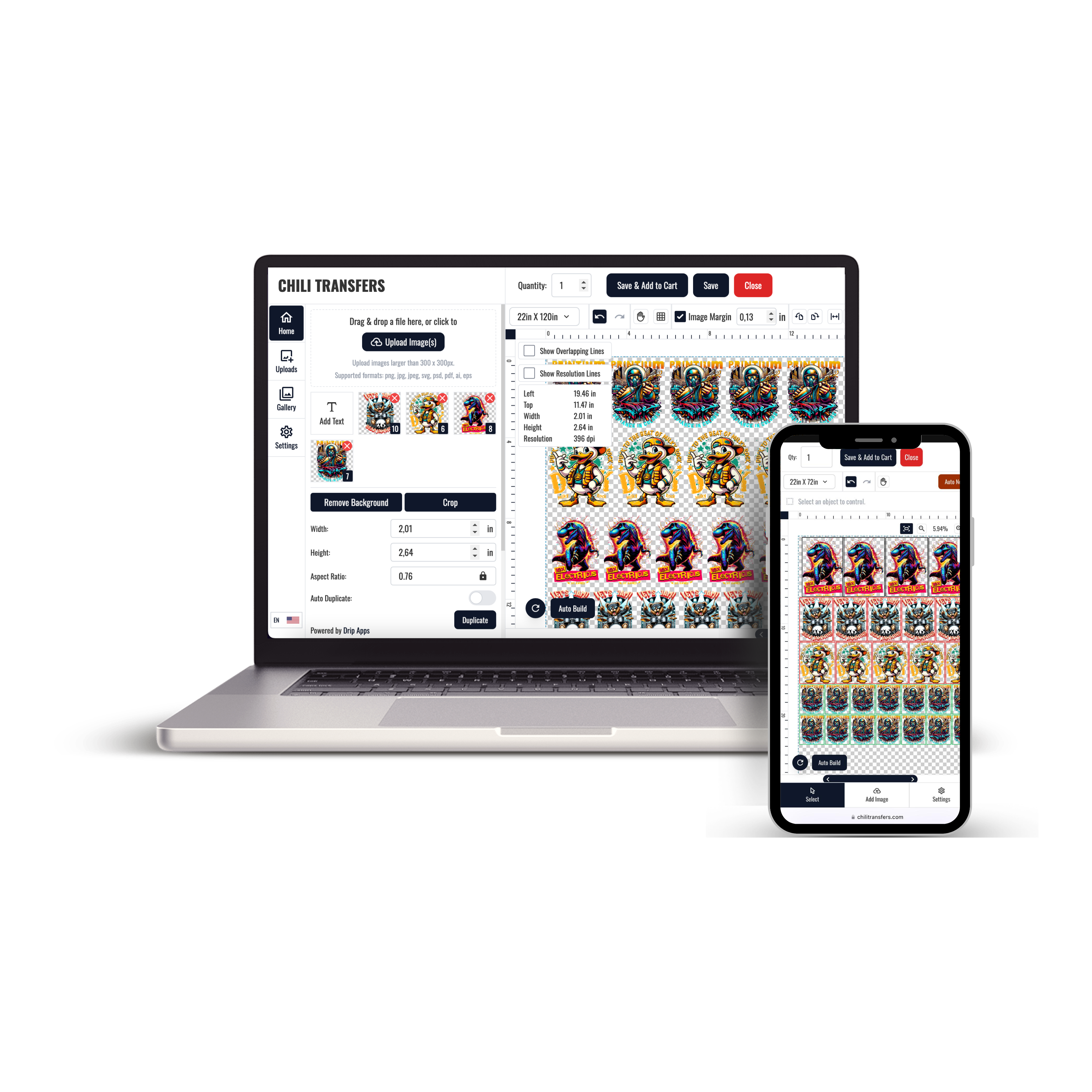
UV Gang Sheet Builder is a layout tool for organizing multiple UV DTF designs within one sheet before production. It is useful when a project includes repeated logos, different artwork sizes, several design versions, or multiple graphics that need to be prepared together.
Use the UV Gang Sheet Builder when your UV DTF project requires several designs to be arranged within one production layout.
What Is a UV Gang Sheet Builder?
A UV gang sheet builder helps arrange multiple transfer designs within one sheet. Instead of treating every graphic as a separate production file, artwork can be grouped according to the finished dimensions and quantities required for the project.
The builder should be used after the artwork itself has been approved. It is a layout tool, not a replacement for final artwork review.
When Does the Builder Make Sense?
- You need several different designs.
- You need multiple copies of one graphic.
- Your project includes different finished transfer sizes.
- You are preparing graphics for several products.
- You want to organize multiple UV DTF designs together.
Prepare Artwork Before Building the Sheet
Final artwork decisions should be complete before the layout stage begins. Confirm the graphic, dimensions, quantity, and intended application before placing it into the builder.
Artwork Preparation Checklist
- Final artwork version approved
- Finished dimensions confirmed
- Quantity confirmed for each design
- Text and spelling reviewed
- Intended application surface identified
Confirm Transfer Size Before Layout
Every graphic should have an intended finished size before it is added to the gang sheet. Logos, labels, decorative graphics, and larger artwork may require different dimensions depending on the product and application area.
If you only need individual transfers at known dimensions, review UV DTF Transfer By Size before deciding whether a builder-based gang sheet workflow is necessary.
Simple Sizing Workflow
- Choose the item being decorated.
- Identify the available application area.
- Set the finished artwork dimensions.
- Confirm the required quantity.
- Add the approved design to the layout.
Organize Multiple Designs Clearly
A UV gang sheet may contain several artwork versions, so the layout should remain easy to understand and separate after production.
Keep the Layout Controlled
- Group repeated artwork logically.
- Keep different designs easy to identify.
- Confirm that every required graphic is included.
- Check the number of copies before finalizing.
- Review the complete sheet before submitting the order.
Builder vs. Uploading a Finished UV DTF Gang Sheet
The correct route depends on whether you still need to create the layout.
Use the Builder When You Need to Arrange Artwork
The UV Gang Sheet Builder is the appropriate workflow when the designs still need to be organized into a sheet.
Upload the Sheet When the Layout Is Already Complete
If your final layout has already been prepared, use Upload Your UV DTF Gang Sheet instead of rebuilding the arrangement.
Before uploading, verify the artwork versions, finished dimensions, quantities, and complete layout.
UV Gang Sheet Builder vs. UV DTF Gang Sheet
The builder is the layout stage. The UV DTF gang sheet is the resulting production format used to group multiple transfers together.
Review the UV DTF Gang Sheet when comparing the finished gang-sheet ordering option with the builder workflow.
Keep UV DTF Separate From Apparel DTF
UV DTF and apparel DTF are different production and application workflows. A UV gang sheet builder should not be treated as an apparel-transfer builder simply because both use gang-sheet organization.
This distinction matters when selecting the right artwork workflow, production format, transfer type, and intended application.
Build the Sheet Around the Actual Project
The most useful UV Gang Sheet Builder workflow starts with approved artwork, known dimensions, confirmed quantities, and a clear application plan.
Arrange the layout only after those decisions are complete. If the sheet is already finished, use the upload route instead. This keeps the builder focused on layout organization rather than unresolved artwork decisions.